



SAP Business AI Platform: BTP, Data, and AI Unified
The SAP Business AI Platform (BAIP) brings SAP BTP, SAP Business Data Cloud, and the AI Foundation together in one architecture. We set it up on the SAP standard – with central governance and as a base for multiple AI use cases instead of just one.







What is the SAP Business AI Platform?
The SAP Business AI Platform is the architecture SAP introduced at Sapphire 2026. It brings together three building blocks that used to be considered separately: the SAP Business Technology Platform (SAP BTP), the SAP Business Data Cloud, and the AI Foundation with SAP AI Core, SAP AI Launchpad, and the Generative AI Hub. In the market it is often abbreviated as BAIP.
SAP describes the platform as the place where AI is built, given business context, and governed. For your system landscape this means: integration, data foundation, and AI runtime are no longer separate initiatives running side by side. Model access, governance, and cost monitoring can be set up once and reused for Joule, custom agents, and document processing alike.
Your starting point
What slows down platform adoption today
- SAP Joule is activated, but SAP AI Core and AI Launchpad were never properly provisioned
- Every team runs its own AI pilots – without shared governance, model access, or budget control
- Unclear how AI Core, AI Launchpad, Generative AI Hub, and Joule relate to one another
- No central guardrails for data masking, content filtering, or personal data
- License and entitlement questions around SAP BTP stall the decision before development even starts
- Early ideas for copilots or document automation exist, but there's no technical foundation for them
What we deliver
The platform as a whole, not as isolated point solutions
- Provisioning SAP AI Core and AI Launchpad as a shared foundation for all AI use cases
- Central governance for model access, data masking, and content filtering across all use cases
- A clear architecture decision: when Joule is enough, and when the Generative AI Hub is needed
- Cost and usage monitoring per resource group, traceable in the BTP cockpit
Architecture
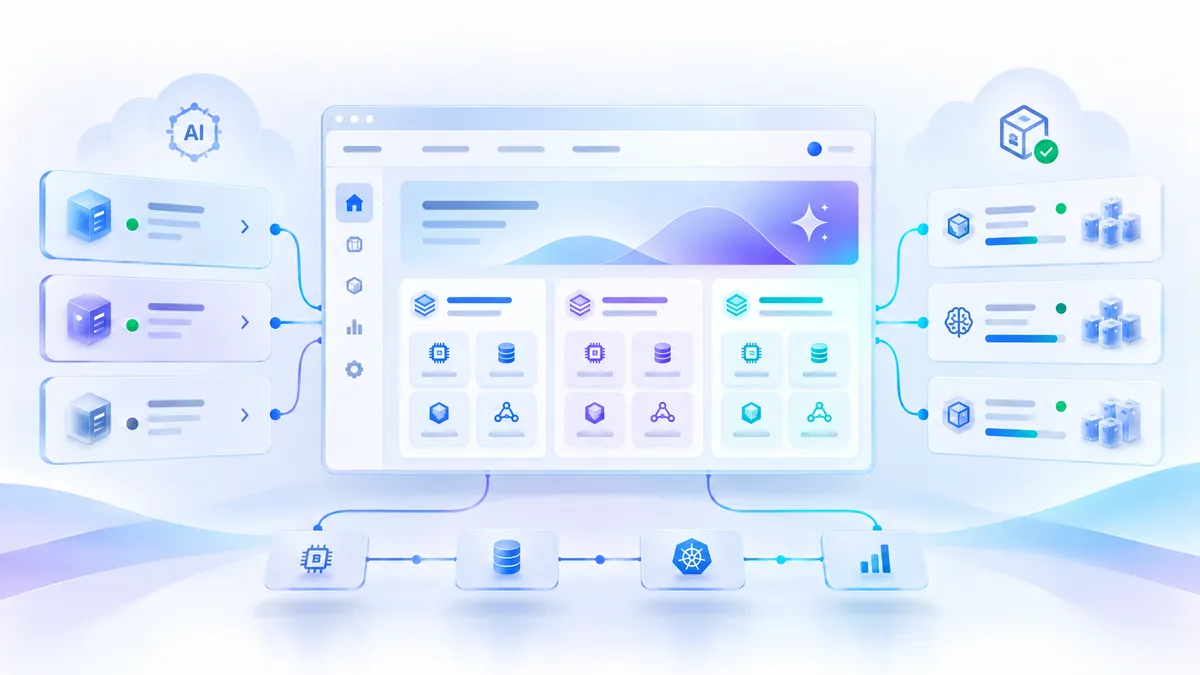
Three layers of the SAP Business AI Platform
SAP structures the platform into a context layer, a build layer, and a governance layer. The context layer carries the other two: without a clean data foundation, every agent stays imprecise.
Which building blocks are relevant for you depends on your planned use cases and your entitlements – we assess that together before any development starts.
Scope of Services
The building blocks of the SAP Business AI Platform
From the integration and data foundation through the AI runtime to the finished application – these components interlock within the platform.
SAP BTP
Integration, extension, and application development on the SAP standard. SAP BTP is one of the three building blocks SAP brings together in the Business AI Platform – existing subaccounts are the starting point.
SAP AI Core & AI Launchpad
The runtime environment of the AI Foundation and its management interface: deploy and operate models, manage instances and authorizations centrally – one cockpit instead of scattered individual configurations.
Generative AI Hub
Governance-compliant access to language models from multiple providers plus orchestration, grounding, and content filtering – as a capability of AI Core and AI Launchpad, not separate infrastructure alongside them.
SAP Business Data Cloud
The semantic data layer of the context layer: SAP and non-SAP data in one shared foundation that Joule, custom agents, and AI applications build on – without separate data storage per use case.
Knowledge Graphs & Domain Models
Process and domain knowledge from your SAP landscape in structured form, complemented by the new SAP Domain Models – so that Joule and custom agents receive context instead of raw data.
SAP Joule & Joule Studio
Joule is the ready-made AI assistant in SAP applications. Joule Studio forms the build layer: this is where custom skills and agents are created for processes the standard does not cover.
SAP AI Agent Hub
The governance layer of the platform, built on SAP LeanIX: one central place to discover, manage, and govern AI agents from both the SAP and non-SAP world.
SAP Document AI
Applied AI for automated capture of receipts and documents – a concrete, production-ready use case on the platform.
AI Foundation
The foundation first, then the application
SAP AI Core provides the runtime environment where models are trained, deployed, and operated. SAP AI Launchpad is the corresponding interface used to centrally manage instances, deployments, and permissions. We set up both so they carry as a shared foundation for all future AI initiatives – not just for the first use case.
- Provisioning SAP AI Core with the resource groups your use cases need
- Setting up SAP AI Launchpad with role-based permissions per business department
- Connecting to your existing SAP BTP subaccount structure instead of an isolated point solution
- A foundation that Joule, the Generative AI Hub, and Document AI build on equally
From Building Block to Application
Joule isn't always enough – the Generative AI Hub is
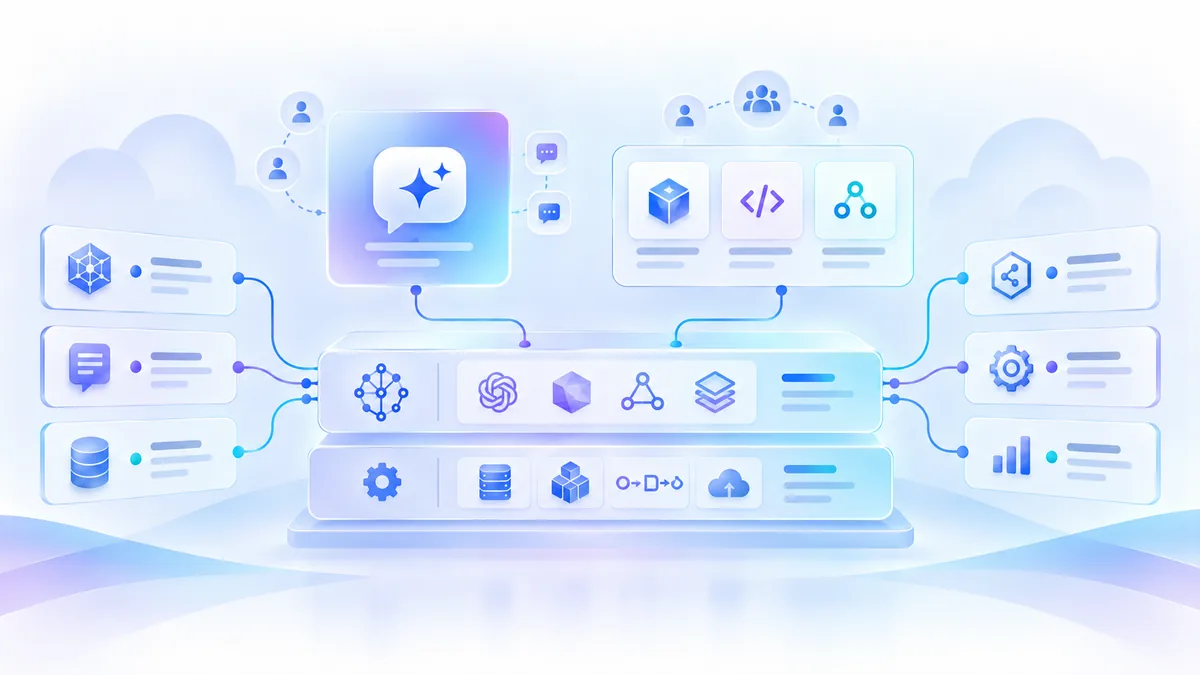
SAP Joule covers many standard cases as a ready-made assistant. As soon as a use case goes beyond the available Joule capsules – a custom copilot, company-specific text generation, an analytics summary – the underlying Generative AI Hub becomes relevant: it provides the same governance-compliant model access that Joule uses internally, just directly addressable for your own applications.
- A clear project decision: activate a Joule capsule, or build a custom application via the Generative AI Hub
- A shared governance layer for Joule and custom copilots instead of separate rule sets
- Grounding on the same SAP data sources, regardless of which component makes the request
- One cost monitoring view for the entire platform instead of separate billing per component
Governance
Guardrails that apply to the whole platform
Without central governance, multiple AI use cases quickly lead to a patchwork of different rules for data masking, content filtering, and cost control. We set up these guardrails once at the platform level – for Joule, Generative AI Hub applications, and Document AI alike – instead of redefining them for every use case.
- Uniform rules for data masking and content filtering across all AI applications
- A roles and permissions concept for AI Launchpad, instead of open access for everyone
- Cost and usage monitoring that surfaces new use cases before they blow past budgets
- Documented guardrails your team can apply independently to new initiatives

Use Cases
What gets built on the platform
The platform itself isn't an end product – the applications built on it are what create the value.
Joule rollout on a clean foundation
Activate SAP Joule without having to retrofit AI Core and governance afterward – platform setup and Joule rollout from a single source.
Custom copilots via the Generative AI Hub
Company-specific assistants for HR, procurement, or sales questions, grounded on your SAP data – built via the Generative AI Hub for cases standard capsules don't cover.
Document automation with SAP Document AI
Automatically capture invoices, delivery notes, and purchase orders and bring them into your SAP system – a production-ready use case on the same foundation.
Central AI governance for multiple business departments
A shared rule set for data masking, cost control, and model access that serves multiple teams and use cases at the same time.
In Context
What does this mean for SAP BTP customers?
The SAP Business AI Platform is not a fresh start. Three points should be settled before the first AI initiative begins.
SAP BTP remains a building block
SAP lists BTP as one of the three building blocks of the platform. If you integrate and extend on SAP BTP today, you are already working on part of the SAP Business AI Platform – existing subaccounts are the starting point, not legacy.
Context determines quality
Agents are only as good as the data they can access. Clarify early which SAP and non-SAP sources belong in the SAP Business Data Cloud and which domain knowledge an agent needs to give reliable answers.
Check entitlements before development
According to SAP, the SAP AI Agent Hub is included in the platform at no additional charge. What changes for existing BTP contracts was not spelled out in detail in the announcement. We review your entitlements before effort goes into development.
Your Benefits
Why the platform perspective pays off
One Foundation Instead of Point Solutions
AI Core, AI Launchpad, and the Generative AI Hub set up correctly once – for all future use cases.
Consistent Governance
One rule set for data masking and content filtering instead of different standards per team.
Reusable Building Blocks
Model access and orchestration configured once, usable for Joule and custom applications alike.
Platform-Wide Cost Transparency
One monitoring view across all resource groups instead of separate cost overviews per application.
Faster Next Use Case
Every additional AI initiative starts on an existing foundation instead of from zero.
SAP-Standard Compliant
Set up entirely on the SAP standard, without workarounds that would block updates.
Rapid-Prototyping Approach
Working prototypes for your prioritized use cases instead of pure concept papers.
A Dedicated Point of Contact
An experienced team guides you from kickoff to productive operations.
News, real-world insights, and perspectives from our SAP experts. (German-language articles)

Frequently Asked Questions
FAQ on the SAP Business AI Platform
The most important questions about the structure, interplay, and setup of the platform building blocks.
SAP brings together the SAP Business Technology Platform, the SAP Business Data Cloud, and the AI Foundation. The platform is structured into a context layer (SAP Business Data Cloud, knowledge graphs, SAP Domain Models), a build layer (Joule Studio), and a governance layer (SAP AI Agent Hub). Applications like SAP Joule and SAP Document AI build on top of it.
BAIP is the abbreviation commonly used in the market for SAP Business AI Platform; SAP itself usually writes the name out in full. SAP BTP is not replaced: SAP explicitly names it as one of the building blocks brought together in the new architecture. Existing BTP landscapes are therefore the starting point for the platform.
SAP AI Core is the runtime environment where models are trained, deployed, and executed – comparable to a backend infrastructure. SAP AI Launchpad is the corresponding interface used to manage instances, deployments, and permissions without working directly with the underlying infrastructure.
Yes, SAP AI Core, AI Launchpad, and the Generative AI Hub run on SAP BTP and require the corresponding entitlements. Which ones specifically depends on which building blocks and models you want to use – we check that together with you before the setup.
SAP Joule internally uses the same model access that the Generative AI Hub also provides for custom applications. For standard cases, Joule is enough as a ready-made assistant. As soon as a use case goes beyond that, you access the Generative AI Hub directly to build custom copilots or automations – on the same foundation.
Even for a single use case, a clean AI Core and governance foundation makes sense – it prevents rework later on. But the real leverage of the platform perspective shows once a second or third use case comes along and can build on the same foundation.
We first assess which building blocks your planned use cases actually need, set up AI Core, AI Launchpad, and the Generative AI Hub if required, and define the governance guardrails. Following a rapid-prototyping approach, we show a working first use case early instead of just a concept paper.
One foundation for all your AI initiatives
We show you how the SAP Business AI Platform fits into your system landscape in concrete terms: which building blocks you actually need, what your existing SAP BTP already covers, and where central governance saves you rework later on.