



Migration to SAP Integration Suite
SAP is ending mainstream maintenance for SAP PI/PO in 2027. SERKEM guides the migration to SAP Integration Suite in a structured, low-risk way with a clear roadmap.








SAP Integration Suite as the PI/PO successor
SAP is ending mainstream support for SAP PI/PO in 2027. SAP Integration Suite on BTP is the official successor, offering considerably broader functionality than the on-premise predecessors with Cloud Integration, API Management, and Open Connectors.
SERKEM systematically migrates your existing PI/PO scenarios to SAP Integration Suite — with a complete inventory, migration roadmap, iFlow development, and test concept through to production operation.
Your requirements
What companies need for the migration
- SAP PI/PO is going out of maintenance and needs to be replaced
- Complex integration landscape with no internal migration capacity
- Hundreds of PI scenarios need to be assessed and prioritized
- Operating Integration Suite after migration is not yet secured
- Migration needs to happen alongside ongoing operations
Our solution
What SERKEM delivers
- Complete inventory of all PI/PO scenarios
- Migration roadmap prioritized by criticality
- iFlow development and migration in Integration Suite
- Test concept and acceptance testing for all migrated scenarios
- Hypercare support after go-live and optional AMS operations
From end of maintenance to a production Integration Suite
What the PI/PO-to-IS migration covers
A successful migration is not a lift-and-shift. SERKEM covers every technical and organizational phase — from analysis to sustained operations.
- Export of the PI/PO inventory list from the Enterprise Service Repository (ESR)
- Complexity assessment: simple / medium / complex per ICO
- Adapter classification: RFC, IDoc, SOAP, REST, SFTP, JDBC, proxy
- Migration roadmap with priority order and timeline
- SAP Migration Assessment tool: automated ICO-to-iFlow conversion
- Adapter mapping: RFC→IDoc sender, SOAP→REST, file adapter, SFTP
- Message structure mapping: XSLT and graphical mapping in IS
- Error handling: exception subprocess, alert configuration, retry logic
- Integration Suite activation: Cloud Integration, API Management, OData provisioning
- Cloud Connector setup for RFC/IDoc connections to on-premise SAP systems
- Destination configuration with OAuth2, basic auth, and certificate-based auth
- Subaccount roles: development, test, production with separate clients
- Test concept: test case catalog per ICO with expected payload structures
- Unit tests in IS: simulation with mock data in the Integration Suite Designer
- E2E tests: trigger in the source system → validation in the target system
- Regression testing: PI/PO and IS run in parallel until cutover sign-off
- Cutover runbook: precise, step-by-step execution plan
- Go/no-go criteria with clear ownership and time limits
- Staged rollout: less critical scenarios cut over first
- Rollback strategy: PI/PO ICOs stay active until production is stable
- Hypercare phase: intensified monitoring and prioritized incident handling
- iFlow performance optimization based on production data
- Knowledge transfer: operations manual and admin training for internal teams
- Optional: SERKEM AMS with incident management and a minor-changes allowance
PI/PO inventory and complexity assessment with the Migration Assessment tool
Before a single iFlow is developed, you need clarity on the current state: how many ICOs are there? Which adapters are used? Which scenarios are complex, and which can be migrated automatically? The SAP Migration Assessment tool answers these questions in a structured, documented way.
- Export of the PI/PO inventory from ESR: ICOs, communication channels, mappings
- Automated complexity assessment via the Migration Assessment tool
- Adapter analysis: identifying adapter types that can't migrate directly
- Migration effort estimate per scenario, in person-days
- Prioritized roadmap: critical business processes vs. low-priority scenarios

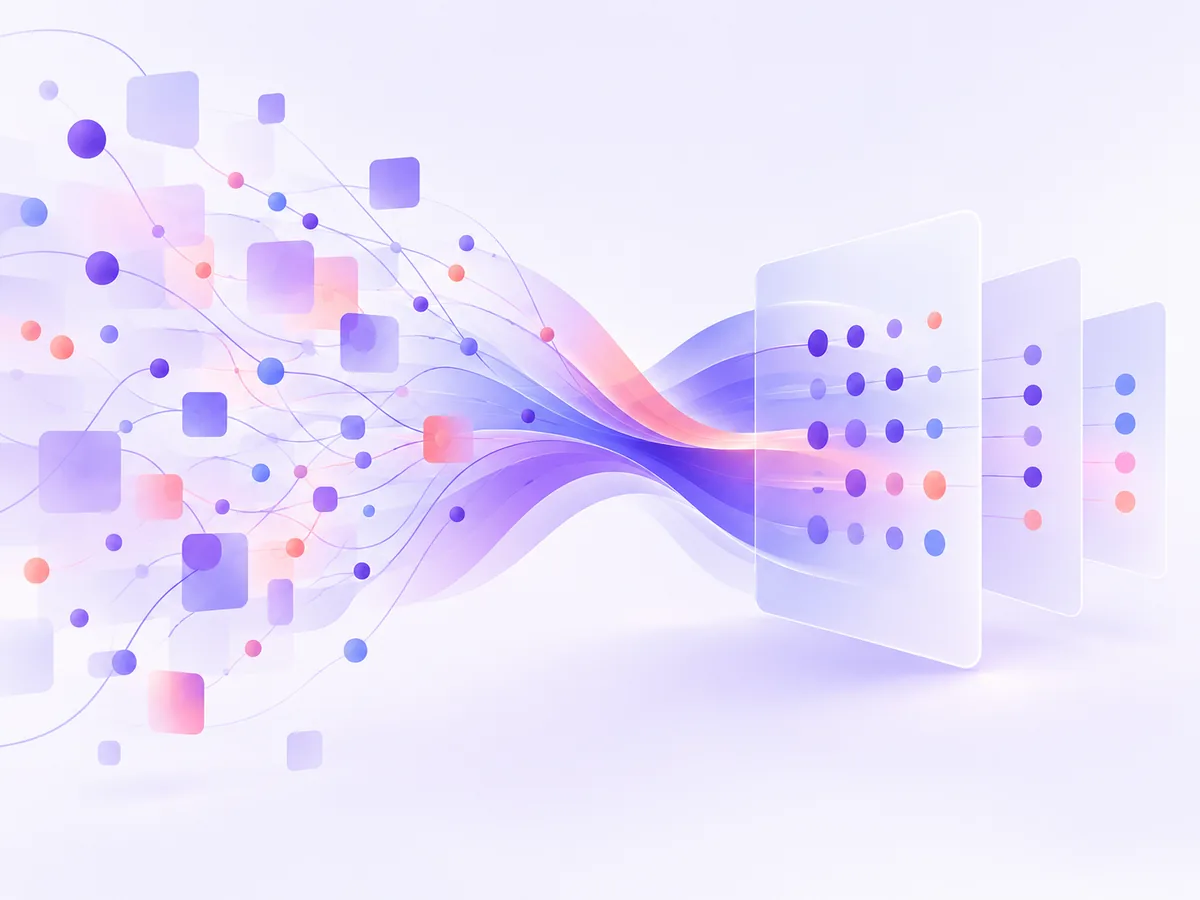
iFlow development: from the PI/PO ICO to a production-ready Integration Flow
The Integration Suite iFlow is the functional equivalent of the PI/PO Integrated Configuration Object (ICO). Simple scenarios are converted with the automated migration tool; complex flows are redeveloped in the IS Designer — with more modern patterns, clean error handling, and better observability.
- Automated conversion of simple ICOs with the SAP Migration Assessment tool
- Manual development for complex flows: custom adapters, script steps (Groovy/JS)
- Message structure mapping: graphical mapper and XSLT for transformations
- Exception subprocess: structured error handling with alert notifications
- Parameterization via ExternalizeParameters for dev/test/prod reuse
Cutover monitoring: real-time control during the switchover
The cutover is the most critical moment of the entire migration. SERKEM monitors all message flows in real time via the Integration Suite Operations dashboard — and steps in immediately if anomalies appear. PI/PO ICOs stay active in parallel until all IS iFlows run stably.
- Integration Suite Monitor: every message in real time, with status and payload inspection
- Alert configuration: immediate notification on iFlow errors via email or Teams
- Parallel operation of PI/PO + IS: comparing message volumes and error rates
- Cutover runbook: minute-by-minute documentation of every cutover step
- Rollback triggers: defined criteria and ownership for reverting the switchover
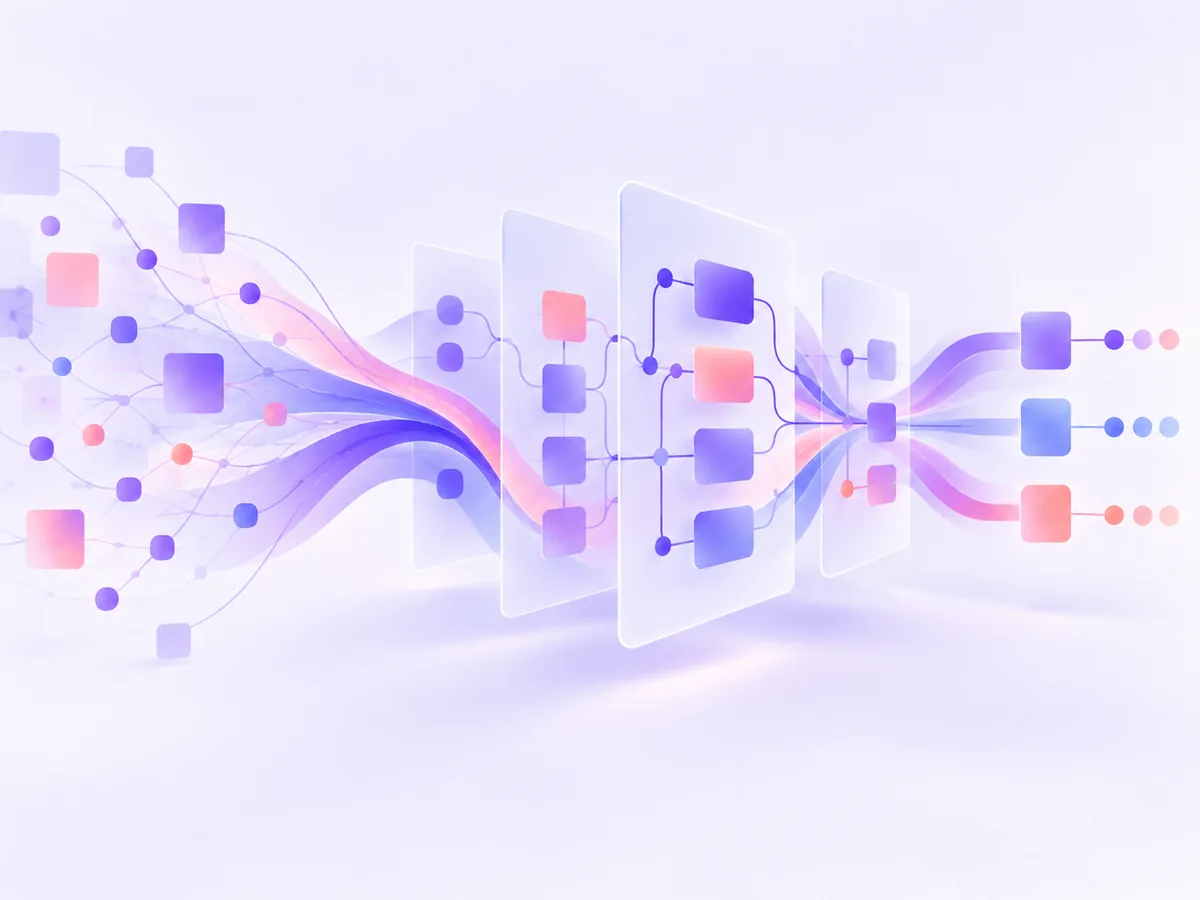
Which migration strategy is right for you?
There's no universal answer. SERKEM analyzes your PI/PO landscape and recommends the strategy that fits your complexity, budget, and timeline.
- Lowest development effort
- Fastest time-to-migrate
- ICO logic is transferred 1:1
- No modernization of the integration
- Technical debt remains
- Automation for simple ICOs
- Modernization of critical scenarios
- Improved monitoring and alerting
- A sustainably maintainable iFlow architecture
- A balanced effort-to-value ratio
- A clean, future-proof architecture
- API Management from the start
- No legacy baggage from PI/PO
- The highest development effort
- The longest migration timeline
From PI/PO to Integration Suite — the structured way
No activity without a plan: SERKEM starts with a complete inventory and an agreed roadmap.
Typical migration scenarios
From classic IDoc scenarios to complex B2B integrations — SERKEM migrates every PI/PO scenario to Integration Suite.
IDoc scenarios to iFlows
Migrating IDoc-based PI scenarios to Integration Suite iFlows — with proven adapter configurations and complete acceptance testing.
SFTP adapter scenarios
Migrating SFTP-based file integrations from PI/PO to Cloud Integration — with the modern SFTP adapter and extended error handling.
SOA services to REST/OData
Transferring SOA-based web services to modern REST or OData interfaces — including API Management integration.
EDI scenarios (EDIFACT, X12)
Migrating B2B EDI scenarios to Integration Suite — with native EDI support in Cloud Integration and B2B management.
Modernizing RFC-based integrations
Transferring RFC-based SAP-to-SAP integrations to modern OData or BAPI scenarios in Integration Suite.
An API-first strategy after migration
Establishing an API-first architecture after the PI/PO migration — with API Management as the central gateway for every integration point.
Why companies choose SERKEM
A PI/PO migration requires deep knowledge of both platforms — and experience with what can go wrong along the way.
PI/PO and Integration Suite experience
We know both platforms from hands-on practice — the baseline requirement for a safe migration without unpleasant surprises.
A structured approach
No activity without a plan: we start with a complete inventory and an agreed roadmap — before a single line of code is written.
Risk minimization
Parallel operations, structured testing, and hypercare prevent surprises at go-live. Nothing goes into production without a green light from testing.
AMS after the migration
SERKEM can also take over ongoing operations of Integration Suite after migration — a seamless transition with no loss of knowledge.
News, real-world insights, and perspectives from our SAP experts. (German-language articles)
APIs im Griff: API-Management der Integration Suite
PI/PO läuft 2027 aus: der Weg zur Integration Suite

Build Work Zone: Launchpad ablösen — oder besser nicht?
Eine Datengrundlage für alles: SAP Business Data Cloud
Apps bauen, ohne den Kern zu berühren: SAP Build
Frequently asked questions about the PI/PO migration
Mainstream maintenance: 2027 (with an optional extension to 2030 for an extra fee). It makes sense to start planning now — the migration effort depends heavily on the scope of your existing PI/PO landscape.
Generally yes, but some adapters and patterns need adjustment — particularly complex Java mappings or proprietary PI extensions. SERKEM assesses this concretely during the assessment phase.
Duration depends on the number and complexity of your scenarios. After the assessment, SERKEM provides a concrete estimate based on the complete inventory.
Yes — hundreds of third-party applications can be connected via Open Connectors and REST adapters, from Salesforce and ServiceNow to legacy systems through generic HTTP adapters.
A common problem — SERKEM uses technical analysis tools to identify active, undocumented scenarios. No scenario is overlooked, even without documentation.
Start your PI/PO migration now
The clock is ticking — SERKEM guides your migration to SAP Integration Suite in a structured, low-risk way with a clear roadmap.