



Agentic SAP Development
SAP extensions built straight from the specification – written by AI coding agents such as Claude Code, GitHub Copilot, and OpenAI Codex, automatically tested, and deployed to SAP BTP through a Git pipeline. Strictly on the Clean Core standard. Without SAP Joule.
No manual ABAP development effort. No manual JavaScript/TypeScript effort for the extension itself – developers specify, review, and approve.
➜ claude
> Fiori Elements app for asset failures, side-by-side
extension on BTP, Clean-Core compliant.
✓ CAP service generated (Node.js)
✓ Fiori Elements List Report / Object Page created
✓ Tests written — 12/12 passing
✓ Branch feature/asset-failure-app pushed
→ Pipeline sap-cicd-service started …
Tools
The agents that write the code
SERKEM uses the leading agentic coding tools – chosen by task, repository, and target system.
Agentic coding in the terminal: reads the existing codebase, plans multi-step changes, and writes, tests, and commits SAP extensions independently.
AI pair programming directly in the IDE. Copilot Workspace handles larger, multi-step changes across several files and services.
An agentic software engineering agent for independent coding tasks – from specification to a finished, working pull request.
What you know
The demand is there – the development capacity isn't
- Business units have concrete requirements for SAP extensions – but every additional ABAP, CAP, or Fiori/UI5 development ties up capacity that's often missing internally.
- SAP Joule answers questions and automates tasks in day-to-day operations – it isn't built for developing your own SAP extensions.
- Classic development projects run for weeks to months – until there's a first working result that can actually be evaluated.
Specification → Code → Deployment
From requirement to deployed app – automated
Six steps, one continuous flow. Human approval stays in place at every critical point.
Every generated line stays on the SAP standard
Agentic SAP Development doesn't change what gets built – only who writes the lines. The agents work within the same guardrails: in-app extensibility, side-by-side extensibility on SAP BTP, and ABAP Cloud/RAP instead of direct changes to SAP standard objects.
Generated code runs through the same quality gates as manually written code – custom code checks, extensibility rules, and tests decide, not the agent itself.
- No access to SAP standard objects – only approved extensibility APIs and events
- ABAP Cloud/RAP instead of classic ABAP with direct table access
- Side-by-side extensions on SAP BTP instead of changes inside the core system
- Automated custom code checks and tests as a fixed part of every pipeline
- Upgradability is preserved – no technical debt from generated code
Rapid Prototyping meets Agentic Development
Working prototypes, not concept decks
SERKEM works according to its own Rapid Prototyping approach – early, working intermediate results instead of functional-spec discussions. Agentic coding tools shorten exactly this first step: a specification turns into a prototype that actually runs by the next review session and can be corrected on the spot.
Why SERKEM
Agents write the code – SERKEM owns the system
Insight
The pipeline in practice
Screenshots from real projects. Pick a step:
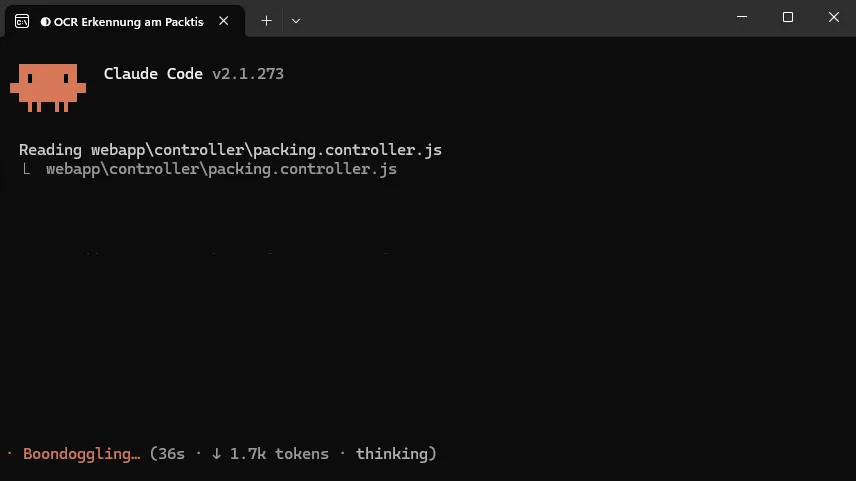
Claude Code reads the codebase, plans the extension, and writes it directly in the terminal – here for OCR recognition at the packing station.
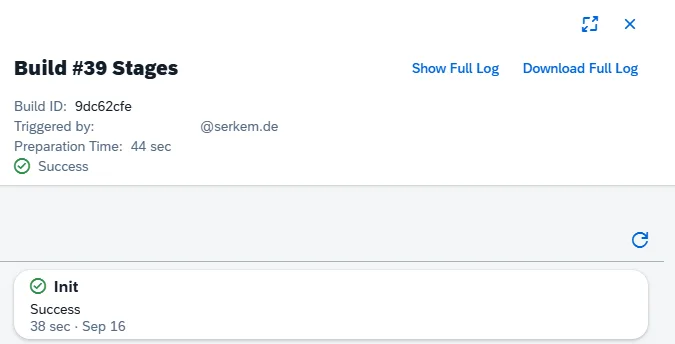
The Git webhook triggers the SAP Continuous Integration & Delivery Service automatically – build stages and result at a glance.
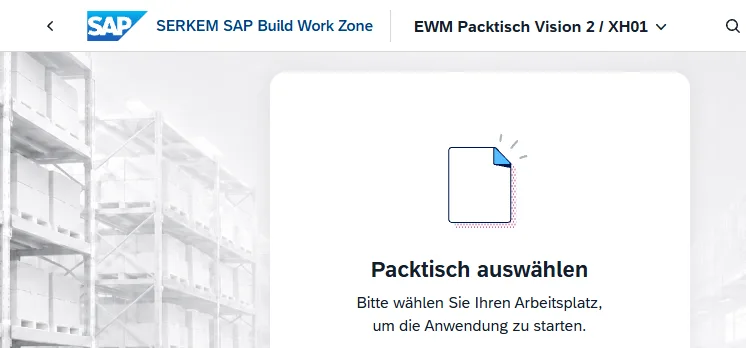
The generated application is ready directly in the SAP Build Work Zone launchpad – ready to go at the packing station.
FAQ
Frequently asked questions about Agentic SAP Development
No. The agent takes over the writing – specification, review, approval, and responsibility for architecture and data model stay with the project team. Every generated pull request is checked before merging, exactly like manually written code.
SAP Joule is designed as an AI assistant for day-to-day operations – for end users and consultants, not for software development. Agentic SAP Development is built around agentic coding tools that work directly inside the development repository. Both approaches aren't mutually exclusive, but they solve different problems.
Compliance isn't left to the agent – it's technically enforced: repository standards, extensibility templates, and automated custom code checks in the pipeline only allow extensions through approved extensibility options. Violations block the deployment.
SAP CAP (Node.js/Java), ABAP Cloud/RAP, SAP Fiori Elements/UI5, and BTP extension apps. Deployment goes into the SAP HTML5 Application Repository connected to SAP Build Work Zone or, for on-premise landscapes, gCTS-based into the SAP S/4HANA front-end server.
With a concrete, well-defined use case: set up the repository and extensibility guardrails, connect a Git webhook to the SAP BTP pipeline, and run the first prototype through the Rapid Prototyping rhythm together. SERKEM handles setup, configuration, and review.
Run a pilot with Agentic SAP Development
A free 30-minute consultation. We'll look at your system landscape, your Git setup, and one concrete use case – and show you what the pipeline would look like.