



SAP Generative AI Hub
Access to leading language models, integrated directly into your SAP landscape. We configure model access, orchestration, and grounding on your SAP business data – for generative AI that's built for production, not just for demos.







What Is the SAP Generative AI Hub?
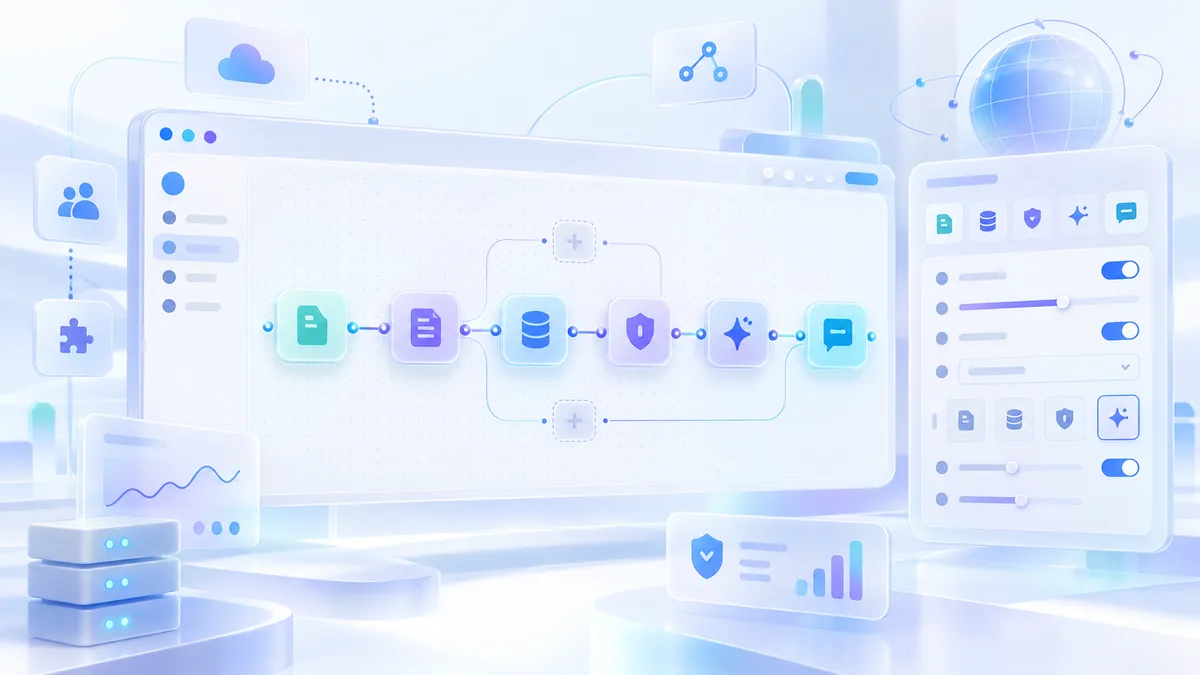
The SAP Generative AI Hub is the central access point for generative AI within SAP AI Core. It bundles access to language models from multiple providers – including OpenAI, Anthropic, Google, and Meta – behind a unified interface, and adds an Orchestration Service for prompt templating, grounding, content filtering, and data masking. That means generative AI can be embedded into real SAP processes, not just tried out.
The difference from a chat tool in your browser is the connection to your SAP business data: models answer questions not just from training knowledge, but based on what's actually in your SAP system – controlled, logged, and without business data leaking to model providers without authorization. Anyone building their own copilots, text generation, or analysis assistants can't get around the Generative AI Hub.
Your starting point
What's holding back generative AI adoption
- Employees use ChatGPT and similar tools in the browser – SAP business data flows to external providers without control
- No central model access exists – every team connects language models individually and differently
- Answers are based on training knowledge instead of real SAP data – hallucinations in a business context
- No guardrails defined for content filtering, data masking, or personal data
- Costs and token consumption aren't traceable, with no budget control per use case
- An idea for a custom copilot exists, but no technical foundation to build it
What we deliver
The Generative AI Hub, set up for production
- Central, governance-compliant access to approved language models in the Generative AI Hub
- An orchestration pipeline with grounding on your SAP data, content filtering, and data masking
- Integration into your own applications via the generative-ai-hub-sdk or the SAP Cloud Application Programming Model
- Cost and usage monitoring per resource group, visible in the BTP cockpit
Model access
One Access Point, Multiple Providers
The Generative AI Hub bundles language models from different providers behind a unified, SAP-managed interface.
Which models are actually available depends on your SAP BTP entitlements as well as regional and contractual requirements – we check this as part of the setup.
Scope of services
The Building Blocks of the Generative AI Hub
From model access to a production application – these components turn a language model into a usable SAP building block.
Model Library & Model Access
Central, license-compliant access to language models from multiple providers via a unified API – without every team having to maintain its own contracts and interfaces.
Orchestration Service
Chaining prompt templating, grounding, translation, and content filtering into a reusable pipeline instead of one-off prompts buried in application code.
Grounding on SAP Data (RAG)
Connection to the SAP HANA Cloud Vector Engine for Retrieval-Augmented Generation – answers draw on your documents and business data, not just on training knowledge.
Guardrails & Data Masking
Content filtering and anonymization of personal data before it's sent to the language model – configured to your data protection requirements.
generative-ai-hub-sdk & CAP
Integration into your own applications via the Python SDK or the SAP Cloud Application Programming Model – for teams building their own assistants.
Consumption Monitoring
Token and cost overview per resource group in the BTP cockpit – budget control instead of surprises on the invoice.
How the Generative AI Hub works
From the Pipeline to Your Own Application
Orchestration
Individual Prompts Become a Controlled Pipeline
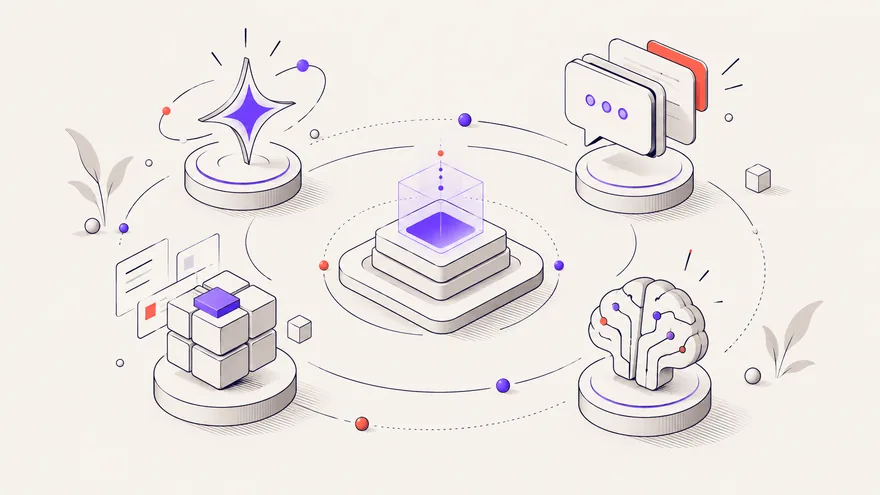
The Orchestration Service chains together the steps a production GenAI request goes through: templating, grounding, data masking, content filtering, and optionally translation – configured once, reusable for every use case. We build this pipeline for your priority use cases and document it so your team can extend it independently.
- Prompt templates versioned and managed centrally instead of scattered across application code
- A content filtering module to block unwanted or business-critical content
- Data masking for personal and sensitive data before every model call
- Switching models without changing application logic, thanks to a unified orchestration API
Grounding & RAG
Answers From Your SAP Data, Not the Training Corpus
Without grounding, a language model answers in a way that's statistically plausible but not necessarily correct. By connecting to the SAP HANA Cloud Vector Engine, we index your relevant documents and data sources as embeddings and incorporate them into every request via Retrieval-Augmented Generation – so the answer is based on what's actually in your system.
- Selecting and preparing relevant data sources for grounding – documents, CDS views, knowledge bases
- Setting up the SAP HANA Cloud Vector Engine for embeddings and semantic search
- Configuring the retrieval strategy – how many and which sources are included per request
Development
From Prototype to Your Own Production Application
Ready-made AI assistants like SAP Joule cover many standard cases – company-specific copilots, text modules, or analysis assistants need their own applications. We connect the Generative AI Hub via the generative-ai-hub-sdk or the SAP Cloud Application Programming Model, build a first working prototype following a rapid-prototyping approach, and hand over the architecture and code, fully documented, to your development team.
- A working prototype for the priority use case instead of just a concept description
- Deployment via SAP AI Core, connected to Fiori apps or SAP Build interfaces
- Code and architecture handover, including documentation, for independent ongoing operation
from gen_ai_hub.orchestration_v2 import (
    Template, SystemMessage, UserMessage,
    LLMModelDetails, PromptTemplatingModuleConfig,
    ModuleConfig, OrchestrationConfig, OrchestrationService,
)

template = Template(template=[
    SystemMessage(content="You are the internal SAP support copilot."),
    UserMessage(content="{{?user_query}}"),
])
llm = LLMModelDetails(name="gpt-4o", params={"max_completion_tokens": 512})

config = OrchestrationConfig(modules=ModuleConfig(
    prompt_templating=PromptTemplatingModuleConfig(prompt=template, model=llm)
))

service = OrchestrationService(config=config)
result = service.run(placeholder_values={"user_query": "What is the delivery status?"})
Use Cases
Typical Application Scenarios
The Generative AI Hub is rarely used in isolation – it's the foundation for concrete, company-specific AI applications.
Internal Copilots & Department Assistants
Chat assistants for HR, procurement, or sales questions, grounded on your SuccessFactors, MM, or SD data – going beyond SAP Joule, for cases standard capsules don't cover.
Automated Text and Document Generation
Generating quote templates, approval texts, or customer communications from structured SAP data – complementing SAP Document AI, which reads documents rather than creating them.
Analysis Summaries for Management
KPIs from SAP Analytics Cloud or CDS views are translated into natural-language management summaries – a basis for decisions instead of a raw data export.
Code and Test Case Support
Generating test data, test cases, and code comments for ABAP and RAP development projects – a building block for your own developer tools, independent of Joule for Developer.
Your Benefits
Why a Structured Setup Pays Off
Controlled Data Flow
No unauthorized transfer of SAP business data to external browser-based chat tools.
Reliable Answers
Grounding on real SAP data instead of model hallucinations in a business context.
One Access Point, Multiple Models
Central model management instead of individual contracts and integrations per team.
Transparent Costs
Token and usage monitoring active per resource group from day one.
Reusable Pipelines
Orchestration building blocks configured once, usable across multiple use cases.
SAP Standard-Compliant
Set up entirely within the SAP standard, with no workarounds that would block updates.
Rapid-Prototyping Approach
Working prototypes for your use cases instead of pure concept papers.
A Personal Point of Contact
An experienced team guides you from kickoff to production operation.
News, real-world insights, and perspectives from our SAP experts. (German-language articles)


Frequently Asked Questions
FAQ: SAP Generative AI Hub
The most important questions about model access, grounding, and setup.
SAP Joule is a ready-made AI assistant for end users within SAP applications – it answers questions and triggers workflows without you having to develop anything yourself. The Generative AI Hub is the underlying platform: you access language models directly, configure orchestration and grounding, and build your own company-specific applications on top of it – including ones that don't exist as a Joule capsule.
The Generative AI Hub provides access to models from multiple providers, including OpenAI (GPT-4o and earlier versions), Anthropic (Claude), Google (Gemini), Meta (Llama), and Amazon (Titan). Which models are actually available depends on your SAP BTP entitlements as well as regional and contractual requirements – we check this as part of the setup.
Grounding anchors a language model's answer in actual data instead of pure training knowledge – via Retrieval-Augmented Generation (RAG) and the SAP HANA Cloud Vector Engine. Without grounding, a model can make plausible-sounding but incorrect statements about your business data. For production use in a business context, grounding isn't an optional extra – it's a prerequisite.
Usage is billed on a consumption basis via capacity units within your SAP BTP contract – depending on the model, request volume, and token consumption. We set up usage monitoring so that costs per resource group and use case are traceable before volumes get out of control.
Yes, for connecting your own applications via the generative-ai-hub-sdk or the Cloud Application Programming Model – development skills are needed here. For configuring model access, orchestration, and grounding, we guide you so your team can then use the platform independently for further use cases, even with modest in-house development resources.
No. SAP operates its own governance and data protection layer for the Generative AI Hub – requests and business data are not used to train the underlying provider models. We also set up content filtering and data masking so that sensitive and personal data is never unnecessarily passed to a model in the first place.
Generative AI Built on Your Data
Schedule a brief initial conversation: we'll clarify which language models fit your use cases, what grounding on your SAP data looks like, and where custom applications deliver more value than standard capsules.